
Dreaming of exploring the vibrant streets of Seoul or the serene temples of Gyeongju in 2026? South Korea is calling! But before you dive into planning your itinerary, a crucial question often pops up: 'Do I need a visa to enter South Korea?'
As of May 26, 2026, entry regulations are dynamic, designed to balance welcoming travelers with streamlined digital processes. Let's cut through the confusion and get you prepared with the latest, need-to-know details for your unforgettable Korean journey.
Here’s a clear breakdown of South Korea’s current entry requirements.

Good News! K-ETA Exemption Extended for 22 Countries Until End of 2026
Fantastic news for travelers from 22 specific countries and regions! The K-ETA (Korea Electronic Travel Authorization) exemption has been extended until December 31, 2026.
This means if you hold a passport from one of these nations and are visiting for non-profit reasons (like tourism or family visits), you do not need to apply for a K-ETA.
The exempted list includes the US, Canada, UK, France, Germany, Italy, Spain, Netherlands, Austria, Belgium, Denmark, Finland, Norway, Poland, Sweden, Australia, New Zealand, Japan, Taiwan, Hong Kong, Singapore, and Macao.
If your country is on this list, your entry process just got a whole lot simpler!

Not Exempt? K-ETA is Your Key for Visa-Waiver Entries!
For travelers from countries with a visa-waiver agreement with South Korea, but not on the K-ETA exemption list, you'll still need to obtain a K-ETA.
Remember, a K-ETA is an electronic travel authorization, not a visa. It's a mandatory pre-approval process you complete online before your departure.
A successful K-ETA application is generally valid for three years and allows multiple entries. Be aware that final entry is always at the discretion of immigration officials.
The application fee is around 10,000 KRW. Processing can take up to 72 hours or more, so I highly recommend applying at least 24 hours in advance – ideally earlier – to avoid any travel hiccups.

All Travelers: Your Digital Welcome with e-Arrival Card and Q-Code
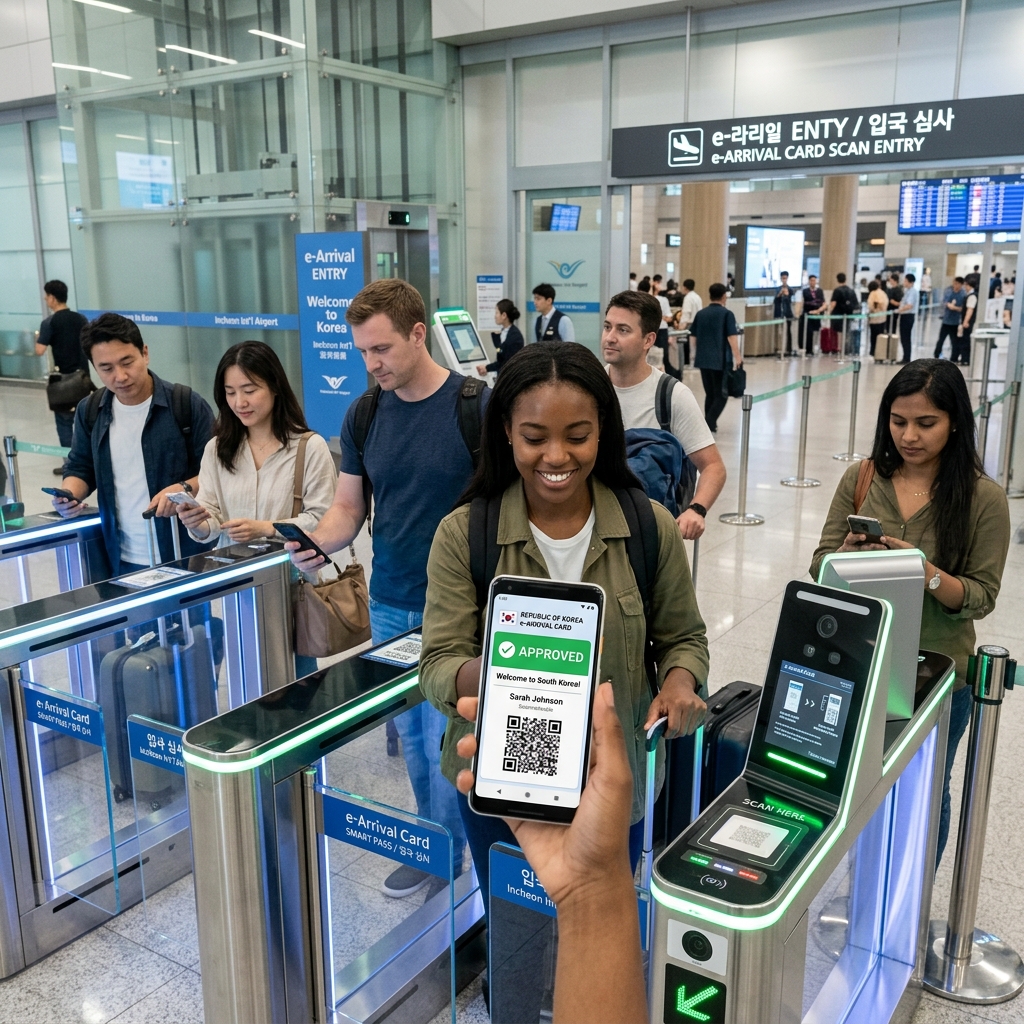
Starting January 1, 2026, all foreign visitors must complete an e-Arrival Card online, replacing traditional paper forms.
This digital submission of your entry information streamlines your arrival experience significantly.
For an even faster process through quarantine, consider using the Q-Code (Quarantine Information Pre-entry System). While optional, pre-registering your health details provides a QR code for a quick 'fast-track' at immigration.
Here’s a great perk: if you have an approved K-ETA, you are exempt from filling out the e-Arrival Card, making your entry even more efficient!
Long-Term Dreams? New Visas for Study, Work, and Digital Nomads
For those planning more than just a short holiday – perhaps to study, work, or embrace the digital nomad lifestyle in Korea – a specific long-term visa is required.
Korea has significantly updated its visa system in 2026 to attract global talent. The Digital Nomad Visa (F-1-D) is now formalized, with expanded eligibility and realistic income requirements.
Student visa policies have been refined to attract top talent and offer clearer pathways for settlement. Overseas Koreans (F-4 visa holders) also benefit from expanded job categories and enhanced residency benefits linked to Korean language proficiency.
These specialized visas involve a distinct application and review process, separate from K-ETA or general visa waivers. Always check the official immigration website for the most up-to-date requirements for your specific purpose.

Quick Travel Prep Checklist:
- K-ETA: Check if your country is exempt until Dec 31, 2026. If not, apply well in advance (72+ hours needed for processing!).
- e-Arrival Card: Mandatory for all, unless you have an approved K-ETA. Complete it online!
- Q-Code: Optional, but recommended for faster quarantine clearance.
- Long-Term Visa: If studying, working, or digital nomading, secure the correct visa.
Avoid These Common Travel Blunders!
- Last-minute K-ETA application: Don't risk delays – apply early!
- Confusing K-ETA with a full visa: They are different. K-ETA is an authorization for visa-waiver travelers.
- Forgetting mandatory digital steps: The e-Arrival Card (or K-ETA) is key for smooth entry.
Ultimately, for your 2026 trip to South Korea, whether you need a visa or K-ETA depends entirely on your nationality and the purpose of your visit.
Always verify your country's status regarding the K-ETA exemption, complete your e-Arrival Card (or ensure your K-ETA is approved), and consider the Q-Code for a super-speedy entry.
With these steps covered, you're all set for an incredible experience in the Land of the Morning Calm. Safe travels!
'Transportation & Practical Tips (교통 및 실용' 카테고리의 다른 글
| Seoul Subway Hack: Free Re-entry! Don't Pay Twice (0) | 2026.05.17 |
|---|---|
| Navigate Korea Like a Local: The Ultimate Guide to Using Intercity Buses (0) | 2025.10.13 |